The Real Reason Consultants Stop Posting on LinkedIn (It's Not Motivation)

In this article (4)
"I don’t see a path that justifies the effort it would take."
"Everything sounds like the same safe advice."
That tension shows up a lot with smart operators.
They know LinkedIn matters. They know buyers look people up before calls, after referrals, and during a deal. Still, the posting habit never sticks.
From a management consultant’s view, that hesitation makes sense.
If an activity takes steady time, demands fresh thinking every week, and has fuzzy output, it gets pushed behind client work, leadership meetings, pricing decisions, and the next operating model problem. In a real workload, recurring tasks survive only when the process is light and the payoff is visible.
That is where most LinkedIn content creation breaks.
For a consultant, a senior manager, or a partner, the bar is not just to post. The bar is to say something sharp enough to earn attention from busy people who have seen a thousand polished takes before. As the interviewee put it, “It’s hard to differentiate.”
Gartner has reported that a typical B2B buying group includes 6 to 10 stakeholders, which means your expertise has to hold up across more than one reader and more than one agenda.
Edelman has found that strong thought leadership can push buyers to consider firms they would not have otherwise considered.
So yes, showing up matters. But look closer. The reason people stop posting is usually more mechanical than emotional.
Why the habit keeps dying
1. The work repeats, but the effort stays high.
A LinkedIn post is not a one-time project. It comes back every week.
That is the trap. Most people treat each post like a fresh act of creativity, which means every cycle starts with a blank page. Under real pressure, blank pages lose to real deadlines.
2. Safe content feels efficient, but it kills the point.
When time is tight, people reach for generic LinkedIn post ideas, broad lessons, or clean summaries of things everyone already agrees with. That feels productive for a minute.
Then the post lands with a thud because, in the interviewee’s words, “It blends into the noise.” If the market has heard the point before, your post does not build trust. It just proves you can sound professional.
3. The backlog creates guilt, and guilt drains consistency.
Once posting slips for a week or two, the pressure rises. Now you are not just writing the next post. You are catching up.
That is when people start searching for another viral AI LinkedIn post generator or some soft of LinkedIn content tool to clear the queue fast. Those tools can help with speed, but if the output sounds like everyone else, they simply scale the same sameness.
This is why the usual advice falls flat.
"Just be consistent" sounds fine until you map it against an actual week. “Just post what you know” sounds fine until what you know has to compete with a crowded feed full of recycled lessons on leadership, change management, and growth strategy.
The interviewee said, “Nothing feels uniquely actionable.” That is the real blocker. When the signal feels weak, the effort starts to look wasteful.
The better way to see the problem
At first glance, this looks like a motivation issue.
In practice, it behaves more like an operating model issue.
If a recurring task depends on spare energy, fresh inspiration, and personal discipline every single time, it will fail sooner or later. Not because the person lacks intent. Because the system asks for too much effort on every cycle.
That is why the question "how often should I post on LinkedIn" is usually premature.
A better question is this: what would make posting easier to repeat without lowering the quality?
For a consultant, that means building content from existing raw material. Client patterns. Workshop moments. Mistakes leaders keep repeating. Pricing conversations. Cost takeout decisions. Trade-offs inside digital transformation efforts. The sharp stuff is already in the work.
The best LinkedIn posts usually do not come from trying harder to be visible. They come from noticing where the market keeps getting stuck and stating the pattern clearly.
That is also where most AI for LinkedIn falls short.
A generic LinkedIn post generator can help format LinkedIn posts, clean up a draft, or turn rough notes into something readable. Useful, yes. But if the input has no edge, the output will have no edge either. An AI ghostwriter cannot invent a real point of view from thin air. It can only sharpen or flatten what you already feed it.
Consistency comes from lighter lift
Once you see the problem this way, the answer gets simpler.
You do not need more discipline. You need less drag.
Start with a narrower content source. Pull from real decisions, not broad themes.
A post about pricing pressure in a volatile market will usually beat a post about “why strategy matters.” A post about why a cost takeout effort stalled in execution will usually beat a post full of safe advice on operational efficiency.
That is how LinkedIn thought leadership starts to work. It stops sounding like a performance and starts sounding like judgment.
You also need a repeatable way to draft.
That could be a simple note system, a light LinkedIn ghostwriting workflow, or a structured review process with an AI LinkedIn tool. The format matters less than the friction. If every post still feels like starting from zero, the system is not fixed.
And the standard should be clarity, not volume.
People spend too much time asking how to create a LinkedIn post that "performs". A better target is a post that says one useful thing with enough specificity to help a buyer remember you. That is the foundation of LinkedIn personal branding and LinkedIn lead generation for serious B2B work.
When the interviewee says, "It lacks sharpness", that is not a writing complaint. It is an execution complaint.
Sharpness lowers effort because it gives you a clear angle. Clear angles make drafting faster. Faster drafting makes consistency more realistic. Over time, that is what supports LinkedIn business development better than bursts of forced activity ever will.
Silence feels efficient in the short run. On LinkedIn, it hides your judgment behind a company page and leaves the field open for louder voices with weaker ideas. ProVoices sits in that gap between knowing your expertise has value and building a way to show it without turning content into another heavy lift on the weekly list.
Andy from ProVoices
Frequently Asked Questions
How often should I post on LinkedIn if I already have a full workload?
Start with a pace you can keep without creating drag. For most busy professionals, 1 to 2 solid posts a week beats a short burst of daily posting followed by silence.
Can an AI LinkedIn post generator solve the consistency problem?
It can help with speed, structure, and formatting. It usually does not solve the harder issue, which is having a clear point of view that does not sound like safe, recycled advice.
What makes the best LinkedIn posts stand out for consultants?
Specific observations, real trade-offs, and useful judgment. Posts stand out when they pull from actual patterns in growth strategy, pricing, operational efficiency, or change management instead of repeating broad business clichés.
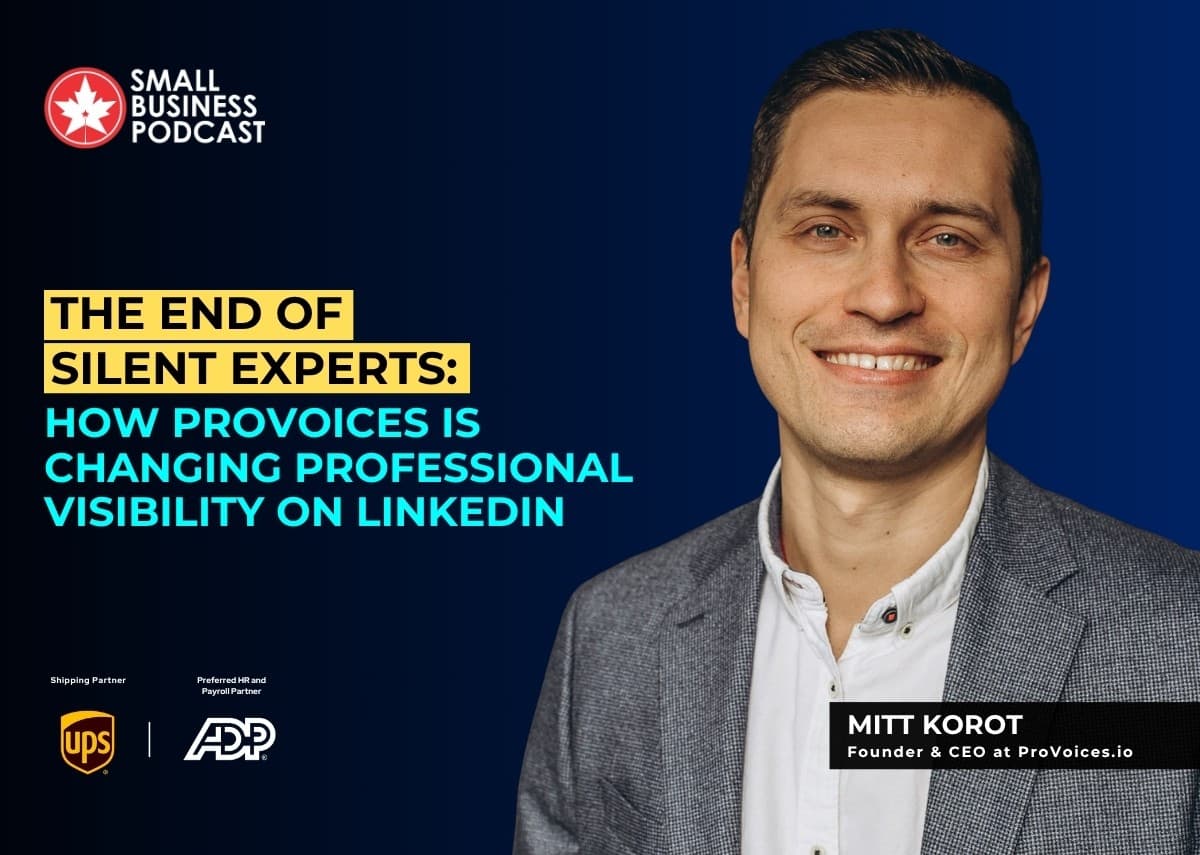
 Mitt Korot